







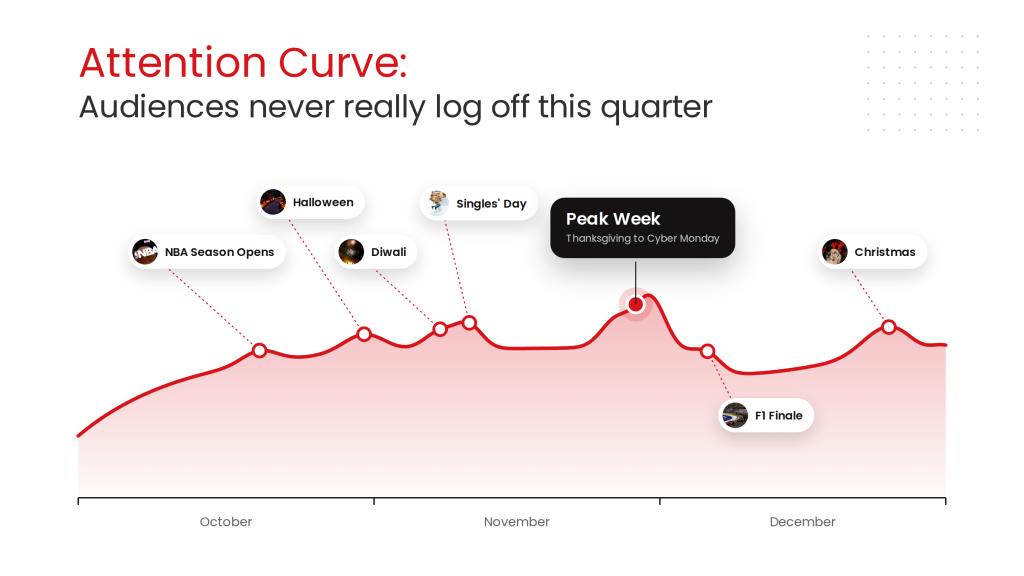
This is the one stretch of the year when audiences have a reason to be online almost every day. Between now and December 31, the festive season, the year’s biggest sales and a packed sporting calendar follow one another so closely that attention never really drops. People plan, celebrate, watch and buy for 90 days without a pause.
Unlock the Full Insights
Tell us a little about you and the rest of this article opens right here, free.
No spam. We only use this to share insights relevant to your site.
This year, the stretch is bigger than ever. Global advertising is forecast to reach $1.27 trillion in 2026. Brands are building their largest campaigns of the year around the season’s biggest events, across festivities, shopping, sport and entertainment. More of that budget is moving into video and other high-impact formats, with US digital video spend alone passing $80 billion.
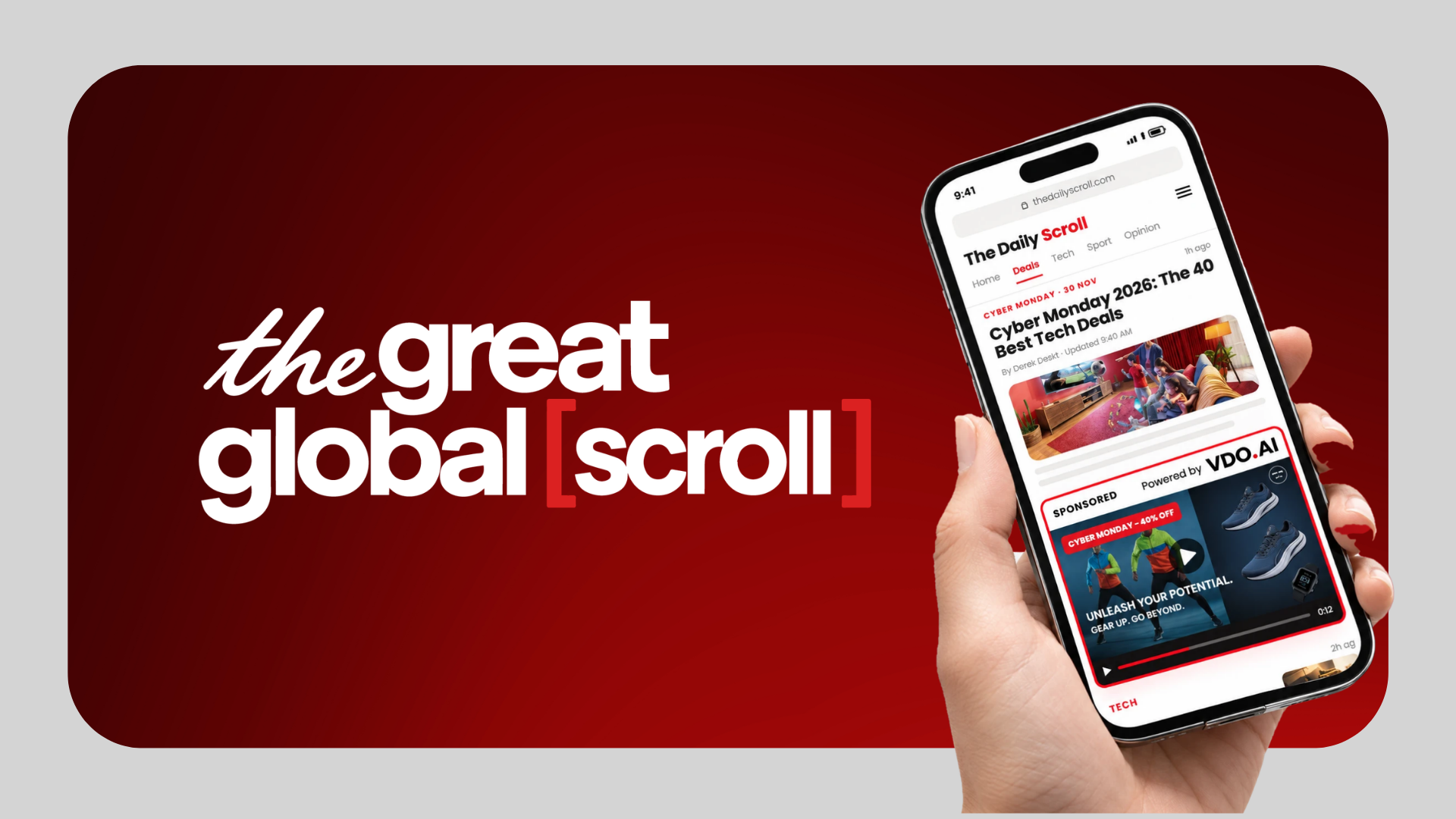
We call it The Great Global Scroll. It is the longest sustained peak in attention the internet sees all year. For publishers, it is the most important 90 days on the calendar.
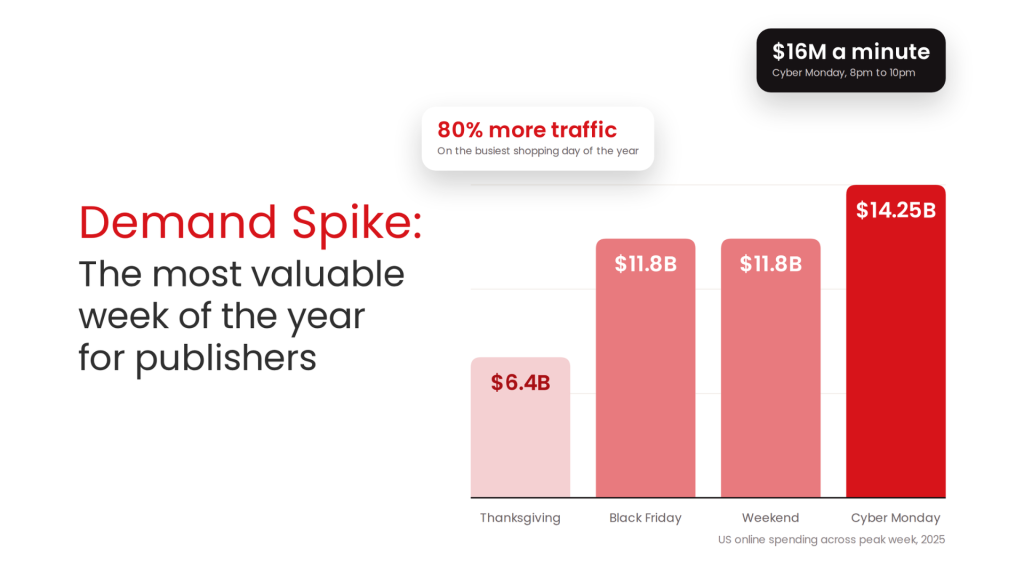
80% More Traffic: Retail sites drew nearly 80% more visits on last year’s busiest shopping day than on a normal day in October.
17% Higher CPMs: US programmatic CPMs climbed through the quarter and by December stood 17% above their October level.
$1.27 T Global Ad Spend: Global advertising is forecast to reach $1.27 trillion in 2026, which is 8% more than it reached last year.
Why This Quarter Needs a Plan
There is a common way to approach Q4 and there is a better one. The common way is to treat it as a single event at the end of November. The better way is to treat it as a 90-day cycle with a beginning, a middle and an end.
Three things determine how much of this quarter’s value a publisher captures. The first is whether the page performs when traffic surges. The second is how many buyers are competing for the inventory. The third is whether the formats on offer are the ones brands will pay a premium for. None of the three can be put in place overnight and each needs time to reach full strength once it is live.
The plan that follows is built on that logic. It sets out everything a publisher needs to do this quarter, in the order that delivers the most.
Your 90-Day Strategy at a Glance
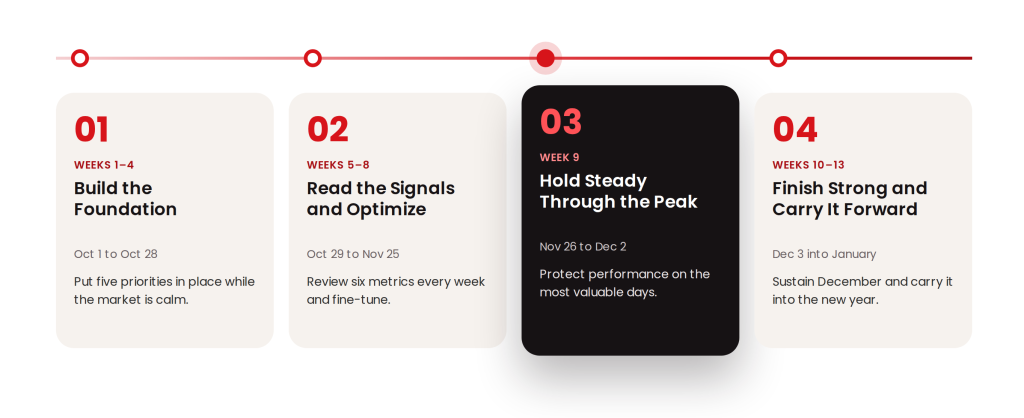
Stage 1: Build the Foundation
Weeks 1–4 · October 1 to October 28
The first four weeks are where the quarter is decided. The market is still calm, which makes this the right time to build. We have ordered the five priorities deliberately, because each one creates the conditions for the next.
A note before you begin: Record your current numbers before you change anything: session RPM, fill rate, viewability and page speed. Without a baseline, you cannot tell what your work has achieved.
Priority 1: Get Your Pages Ready for More Traffic
A page that is fast and stable earns more from every impression it serves. When a page loads slowly, part of the audience leaves before the content appears and the ads that do load are seen by fewer people, which lowers the viewability buyers look at when they decide what to bid. Measure page experience through three Core Web Vitals: how quickly the main content loads (LCP), how quickly the page responds (INP) and how much the layout moves while loading (CLS).
What to Do
- Serve your pages through a CDN with caching switched on, so a surge in traffic is absorbed at the edge and not by your origin server.
- Load ad code asynchronously and lazy load every slot below the fold, so your content renders before the ads do.
- Reserve space for every ad slot in your CMS templates. It is the only guaranteed way to stop the page shifting when an ad arrives.
- Place your video player high on the page. Data shows 73% of video ads above the fold are viewable, against 45% below it.
- Keep mobile ad density under 30% of the page and set refresh intervals at 30 seconds or more.
- Compress images and remove the scripts, tags and plugins you no longer use.
Aim to load your main content in under 2.5 seconds and reach 70% viewability. Once your pages are in that shape, any format you add should protect that work rather than undo it, and that is the thinking behind every VDO.AI format. Each one is designed to sit within the layouts you already have, so you are not rebuilding templates in the middle of your busiest quarter. Our native video runs on a proprietary player built to be extremely lightweight and customisable, so it can be added without slowing the page.
Priority 2: Open More Ways for Demand to Reach You
Price is set by competition. An auction with few bidders clears low and around 40% of the bids that come through Google’s exchange are under 20 cents, which shows how much depends on who else is competing. New demand also needs a few weeks to learn your inventory, which is why this work belongs in October.
What to Do
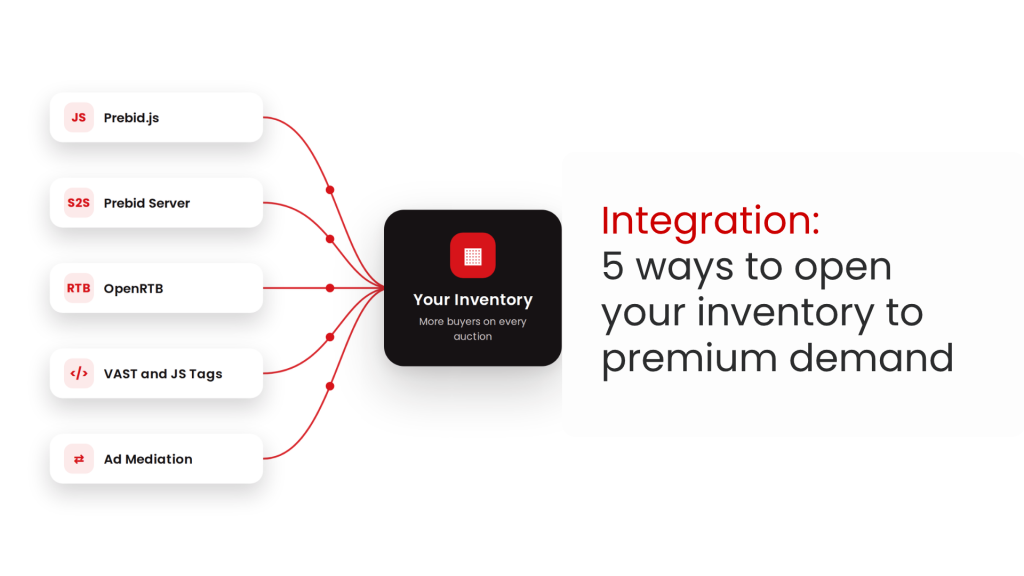
There are four main paths and most publishers have room for more than they use.
- Prebid.js runs header bidding on the page, so multiple buyers bid before the ad server is called.
- Prebid Server runs the same auction server-side, which keeps latency low as bidders are added.
- OpenRTB connects demand server-to-server and supports private marketplace deals.
- VAST and JS tags are the fastest route to live demand. VAST plugs straight into a video player.
- Ad mediation brings all your demand partners into one layer, so you can compare them and control how they compete.
Once they are live, test your auction timeout on your own inventory and review old category and advertiser blocks, which may be keeping out the quarter’s largest spenders. App publishers can apply the same thinking through in-app bidding.
You should see more bids on each auction and no single buyer setting your price. VDO.AI connects through all four paths, so a publisher can begin with a tag and move to OpenRTB or Prebid as volumes grow.
Priority 3: Add High-Impact Formats
Attention commands a premium. On the busiest days of the year audiences see more advertising than at any other time and standard banners are the first to be ignored, so brands move budget into formats that hold attention. Video is the best known of these, yet high-impact is a wider category and a strong format mix draws on all of it.
What to Do
Choose the formats that suit your pages: in-content video for long articles, short-form video for feeds and mobile, an interscroller between sections, native units on listing pages and rewarded or interstitial units in apps.
Explore the VDO.AI Formats
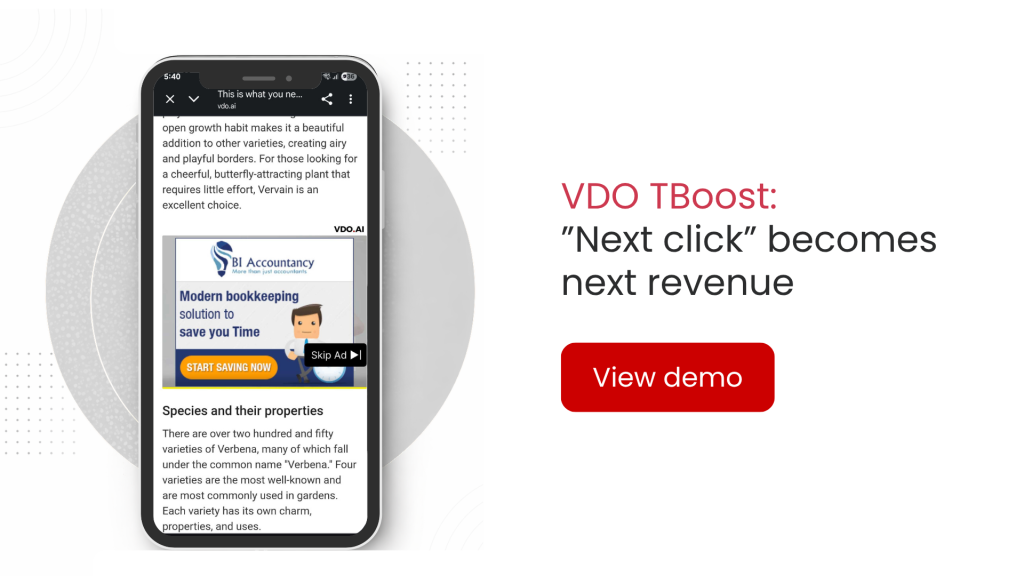
VDO T-Boost
A content recommendation unit that sits within an article, with related stories from your own site picked by contextual AI to match what audiences are reading. It drives higher click-through and more pageviews, so every visit carries more impressions and audiences stay with you for longer.
Best for: articles and listing pages
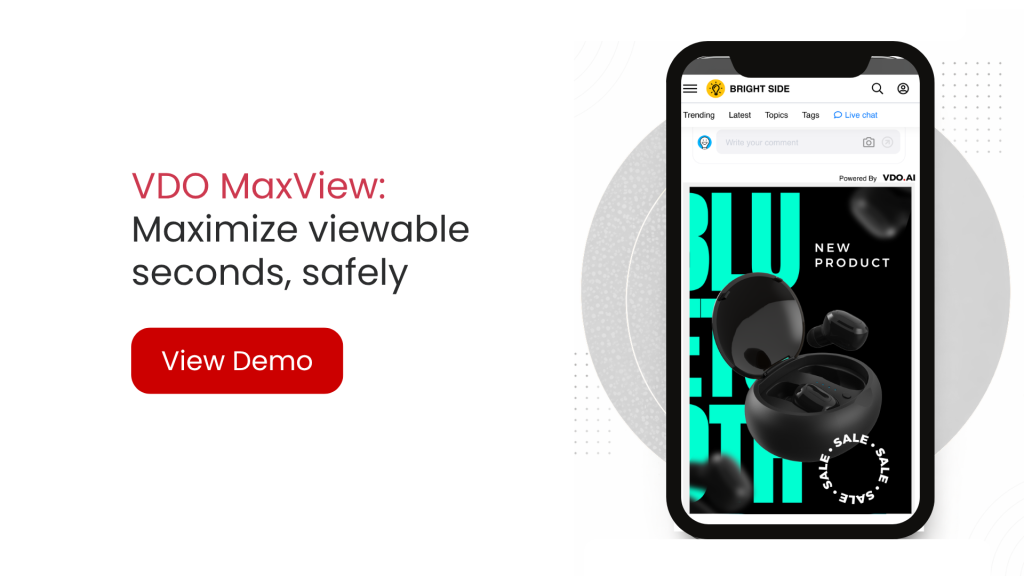
VDO MaxView
A full-width interscroller that sits between sections of an article and is revealed as audiences scroll. It blends into editorial layouts and its viewability logic keeps the ad in view long enough to count, which is what buyers pay a premium for.
Best for: long-form articles and guides
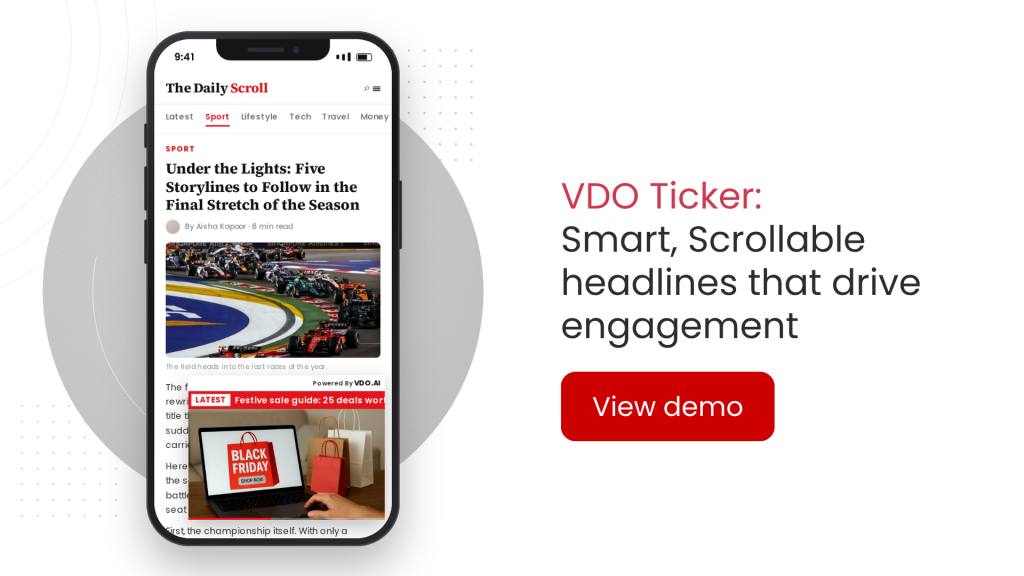
VDO Ticker
Scrollable text overlay that runs across the page with real-time editorial or sponsored headlines. It catches attention without taking space away from your content.
Best for: news, live sport and event pages
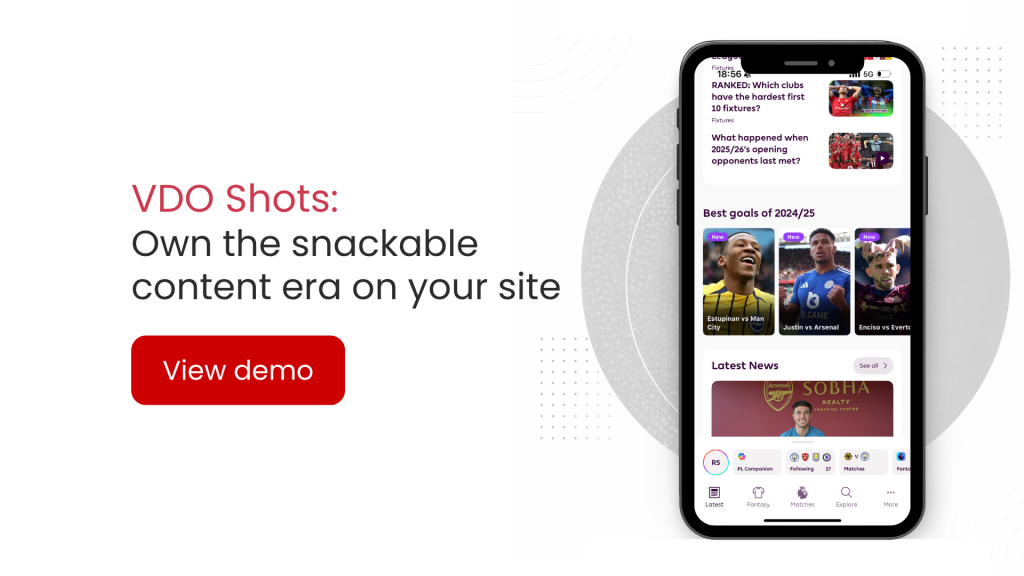
VDO Shots
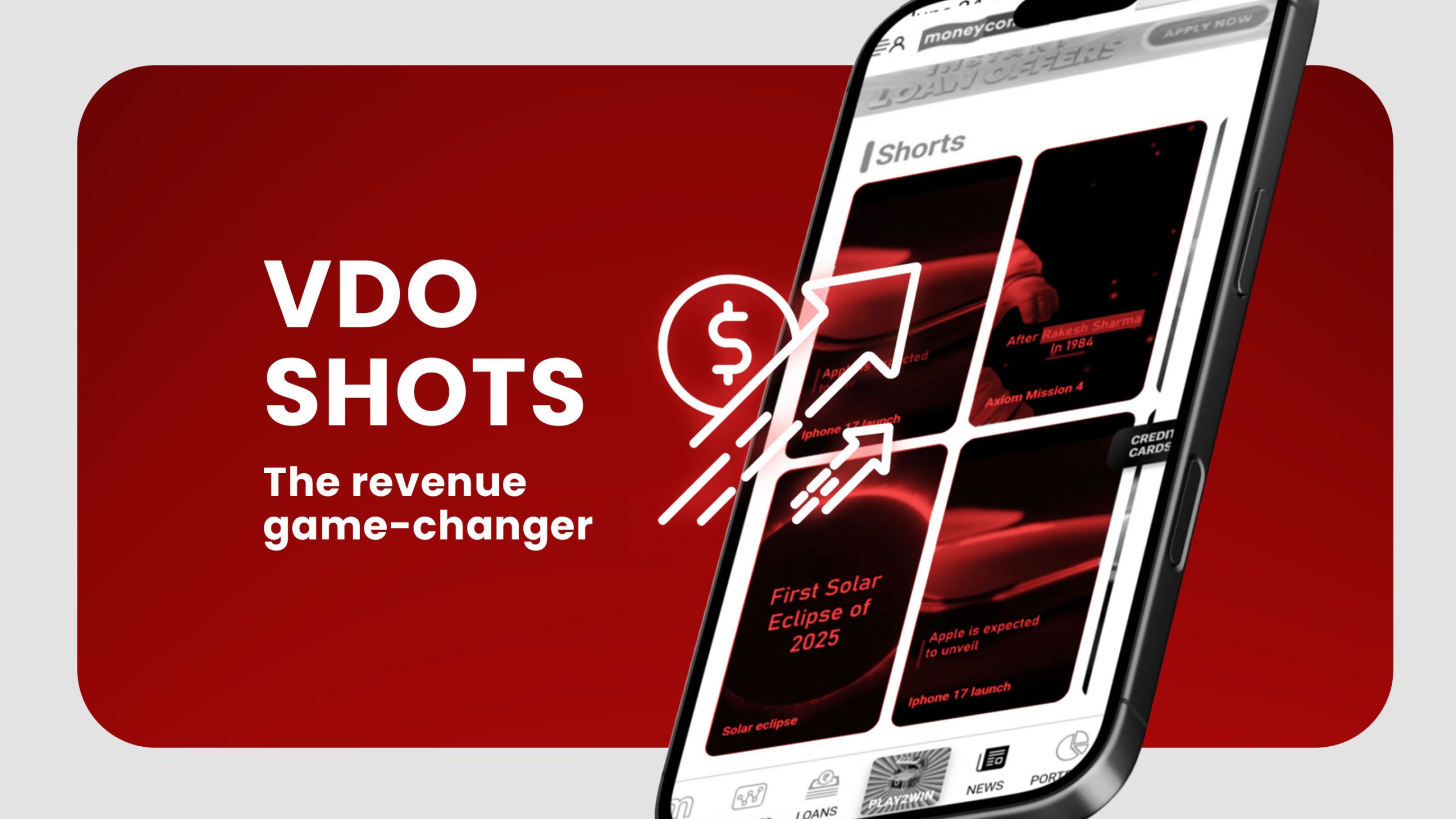
Swipeable short-form video unit that sits within your pages, in the style audiences already know from social apps. It turns a scroll into a viewing session and gives brands the vertical video placements they are buying into. VDO Shots can be live on your pages within 24 hours.
Best for home pages, feeds and mobile
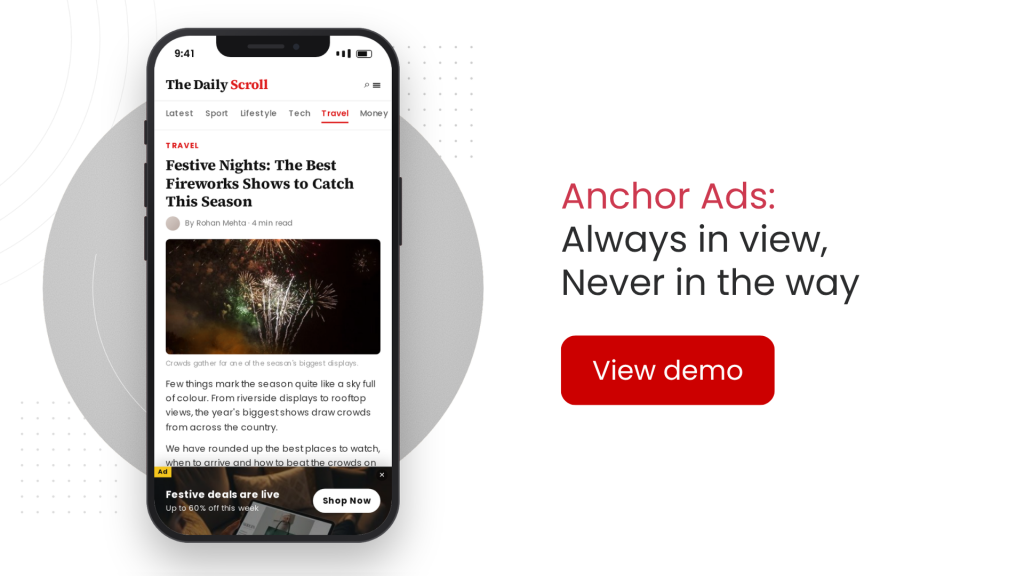
Anchor Ads
Sticky unit that holds its place at the edge of the screen as audiences scroll through content. It stays in view for the whole visit, so it earns from every moment on the page rather than just one.
Best for mobile pages with a long scroll
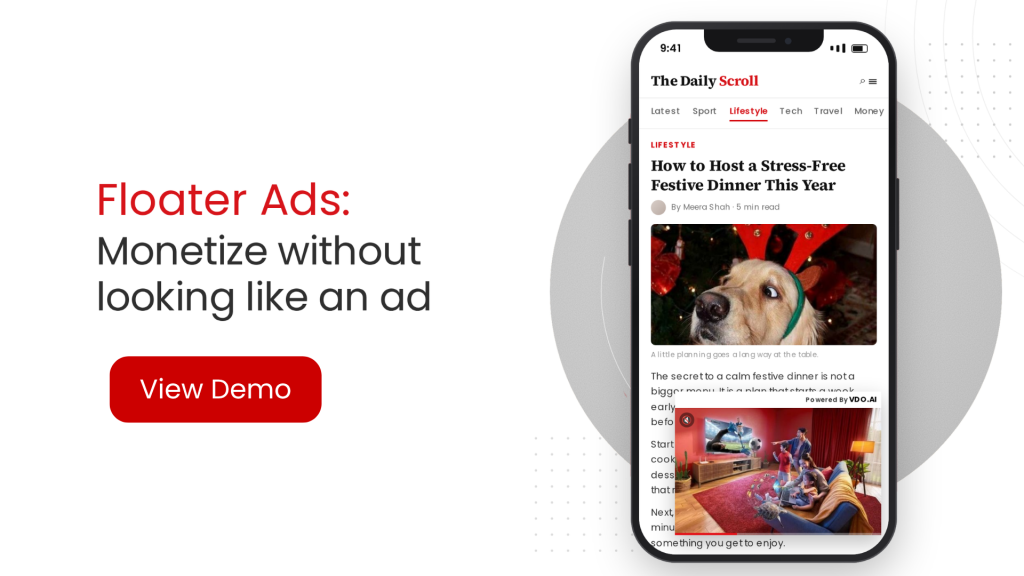
Floater Ads
Compact video unit that floats over the content as audiences scroll, playing on our lightweight and customizable player. It keeps the video in view without interrupting the page around it.
Best for article pages on web and mobile
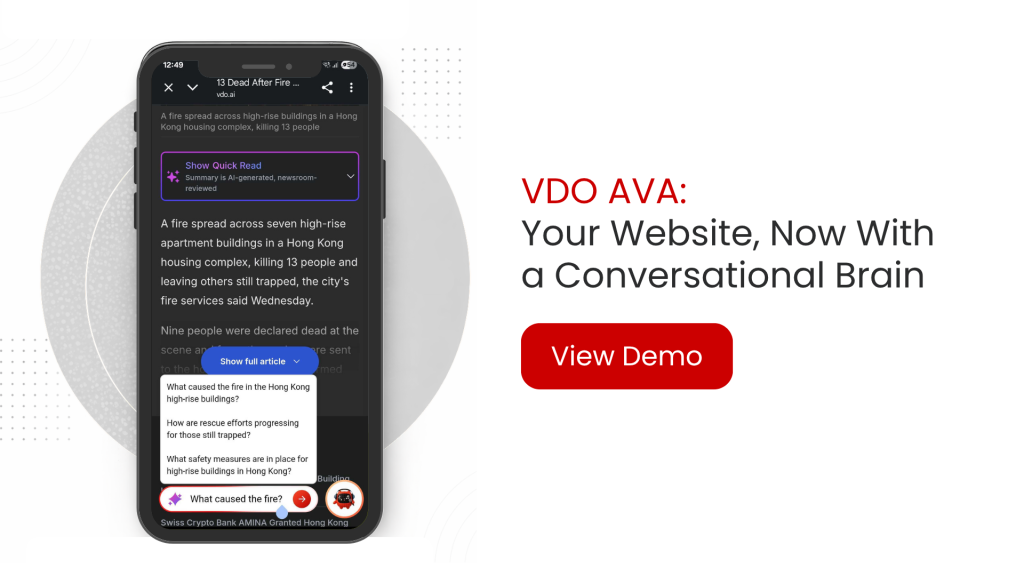
VDO AVA
Conversational assistant unit that sits on your pages and answers audience questions by guiding them to the right content on your site. It deepens every visit and keeps audiences within your site for longer.
Best for content-rich sites, guides and review
Priority 4: Make Your Inventory Brand-Ready
Trust is part of the price. Q4 is when brands run their largest campaigns of the year and they are selective about where those campaigns appear. In an eye-tracking study by Integral Ad Science, ads that matched the page were noticed in 0.4 seconds, against a full second for those that did not. They also lifted purchase intent by 14%.
What to Do
- Make page context clear. Accurate categories and keywords allow ads to be matched to content.
- Label sensitive content, so brand campaigns can avoid specific pages without blocking your whole site.
- Screen for invalid traffic and run creative quality checks, so buyers pay for real audiences and poor-quality ads stay off your best days.
- Set up reporting by placement, so you can see what each unit earns and show buyers what they received.
You should be able to read your earnings placement by placement, with invalid traffic staying low. VDO.AI’s contextual technology reads the page and matches the ad to it. We also screen for invalid traffic and check creatives before they run.
Priority 5: Publish Ahead of the Moments
Content has to arrive before the audience does. People begin searching weeks before they buy, travel or celebrate, so content that goes live early has time to rank and is already drawing traffic when advertiser demand peaks.
What to Do
Build your calendar around this year’s dates and publish three to four weeks ahead of each. Where a moment is closer than that, publish now and keep the page updated.
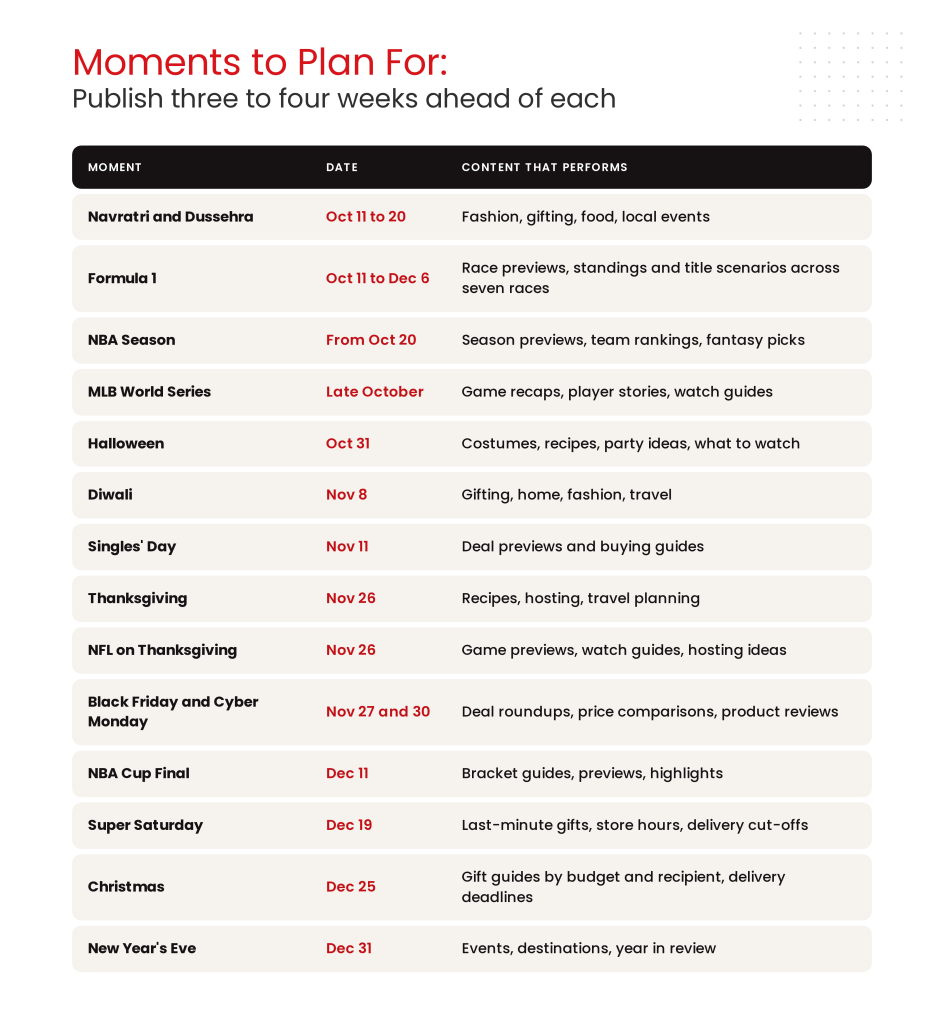
Every moment on your calendar should have content live and ranking before demand peaks. Seasonal content also gives contextual targeting, including ours, more to match against.
Stage 2: Read the Signals and Optimize
Weeks 5–8 · October 29 to November 25
With the foundation in place, the work changes from building to reading. Halloween, Diwali and Singles’ Day each bring a rise in traffic and demand, which makes these four weeks the clearest view you will get of what is working and what is not before the peak arrives.
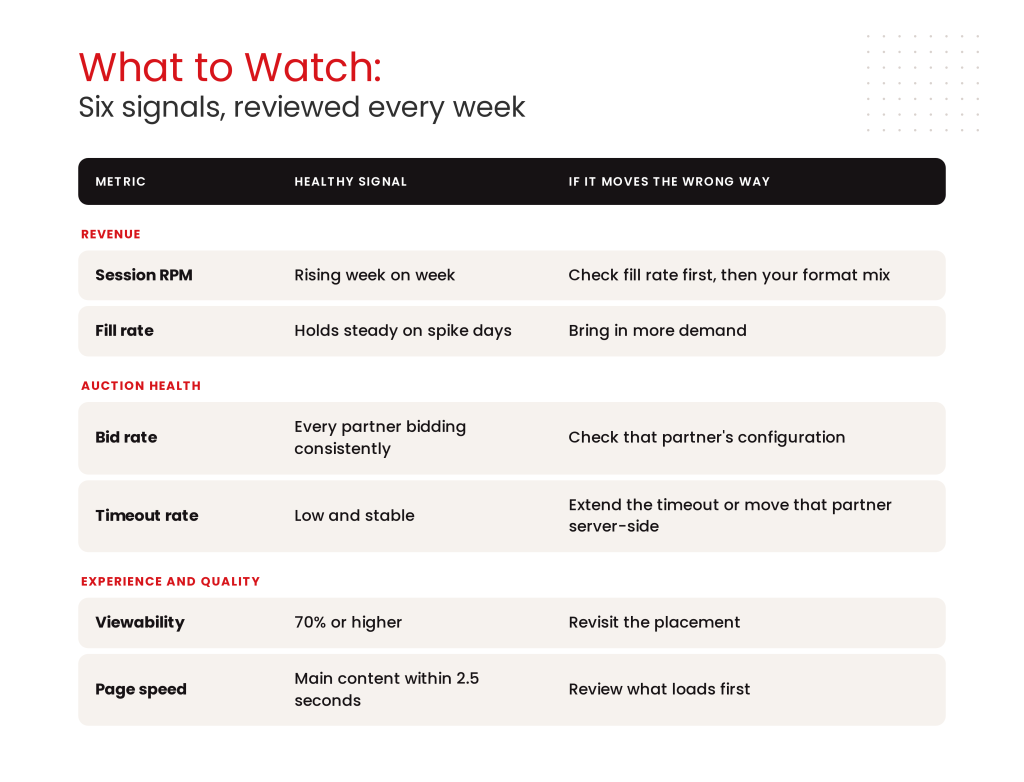
What to Do
- Review the six metrics every week against your Stage 1 baseline.
- Compare spike days with normal days, because that is where weaknesses show.
- Fine-tune one or two things at a time, so you can see what each change achieved.
- Recheck every metric in the week before Thanksgiving, so you go into the peak knowing exactly where you stand.
- If you have audiences in India, treat Diwali week (November 5–11) as your first peak.
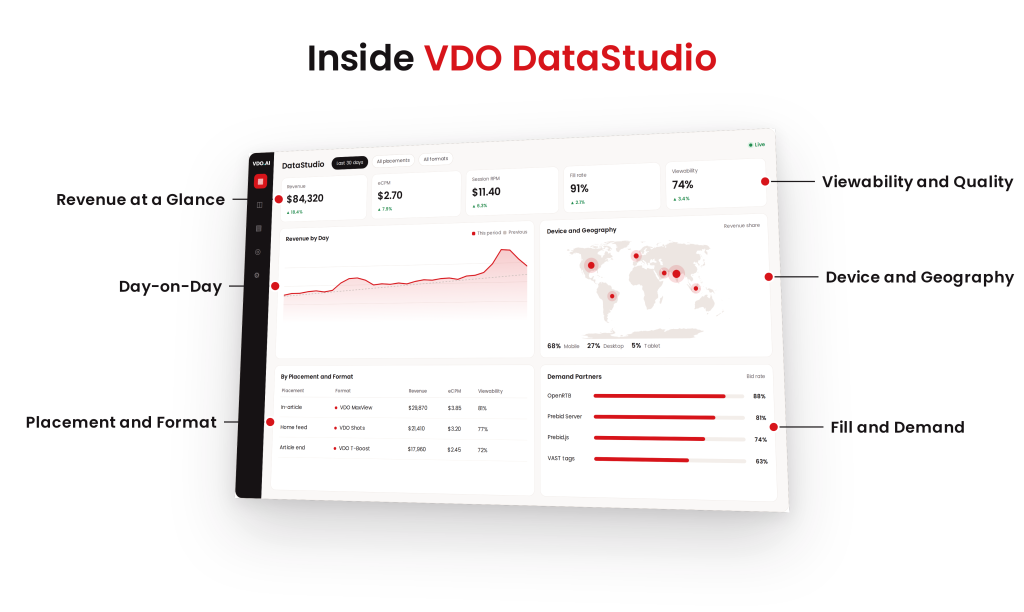
Inside the VDO.AI Reporting Dashboard
Revenue at a Glance
Revenue, impressions, eCPM and session RPM for your inventory in one view. You can see straight away whether each visit is worth more than it was last week.
Placement and Format Breakdown
Every number splits by placement and by format. You can see which units are earning, which are falling behind and where to fine-tune.
Fill and Demand
Fill rate and demand performance across the partners competing for your inventory. A drop on a spike day shows up the same day rather than at the end of the month.
Day-on-Day Comparison
Any day can be set against another. Comparing a spike day with a normal day is where weaknesses show and the dashboard puts the two side by side.
Viewability and Quality
Viewability and invalid traffic for every placement. You can show buyers what they received and fix a placement before it is marked down.
Device and Geography
Performance by device and by country. You can see where your Q4 audiences are coming from and where they are worth the most.
Stage 3: Hold Steady Through the Peak
Week 9 · November 26 to December 2
During the peak, stability is the strategy. Thanksgiving to Cyber Monday is the most valuable week of the quarter and a change made now carries far more risk than reward, because an error on these days costs more than on any other.
What to Do
- Freeze all setup changes for the week. The only exception is a fix for something that has broken.
- Run a morning check. Compare the previous day’s session RPM, fill rate and viewability with the same day a week earlier.
- Run an evening check. Cyber Monday spending peaked at $16 million a minute between 8pm and 10pm last year, so watch page speed and fill through those hours.
- Refresh deal content into the evening, because prices and stock change by the hour.
Your pages should stay fast and your fill should hold, with nothing needing a fix in the middle of the week. Our invalid traffic screening and creative checks run throughout, so demand stays clean when volumes are at their highest.
Stage 4: Finish Strong and Carry It Forward
Weeks 10–13 and Day 91 · December 3 into January
Sustain the Momentum
The quarter does not end on Cyber Monday. CPMs rose a further 6.5% in December last year and strong discounts continued well into the month, so publishers who ease off after the peak give up some of the best-paying weeks of the year.
What to Do
- Keep gift and deal content fresh until the middle of December and publish delivery deadline guides.
- Shift to entertainment, food and travel content in the final week.
- Schedule content and set alerts for the days your team is away.
- Extend campaign end dates, so delivery continues through the holidays.
Session RPM in December should hold close to its peak-week level.
Day 91: Carry It Into January
January is quieter and that is expected. CPMs fell 32.5% last January as advertisers reset their budgets, though video held its value better than display. Keep the demand partners and formats that performed, record your best weeks, pages and formats while they are fresh and plan the travel and new-year content that picks up as shopping fades. VDO.AI’s team reviews Q4 results with its publishers and helps plan the quarter ahead.
Your 90-Day Checklist
Stage 1 (Weeks 1–4)
- Baseline numbers recorded
- Main content loading within 2.5 seconds and viewability at 70% or higher
- More than one demand path live
- High-impact formats on your busiest pages
- Context, traffic screening and placement reporting in place
- Content calendar built and first content published
Stage 2 (Weeks 5–8)
- Six metrics reviewed every week
- All six metrics rechecked in the week before Thanksgiving
Stage 3 (Week 9)
- Change freeze in place
- Morning and evening checks running
Stage 4 (Weeks 10–13 and Day 91)
- December content scheduled
- Q4 review completed
How VDO.AI Helps You Own the Scroll
Every publisher will see more traffic this quarter. Not every publisher will turn it into more revenue. The difference is rarely the size of the audience. It is how well the pages, the demand and the formats behind that audience are prepared for the weeks that matter most. That is the work we do with publishers every day and it is the work this plan was built around. We would be glad to look at your setup with you, show you where the quarter’s revenue is waiting and help you capture it. The Great Global Scroll is already underway. This is the quarter to own it.
Unlock the Full Insights
Tell us a little about you and the rest of this article opens right here, free.
No spam. We only use this to share insights relevant to your site.