







A couple of years ago, CTV’s success had a simpler shape. The goal for most advertisers was clear: deliver premium video at meaningful scale, lock in strong completion and let the message do the brand-building work. CTV was largely planned as an awareness layer, built around passive viewing and polished storytelling.
But CTV has evolved.
Today, the OTT experience is more interactive, more contextual and more multi-screen by default. Viewers move fluidly across apps and content types, and attention is often shared with another device even when TV is on. GWI has reported that 86% of internet users use another device while watching TV, which changes what “exposure” realistically means.
At the same time, ad-supported viewing is not an edge behavior. It is mainstream. Nielsen’s Ad Supported Gauge reported viewing to content with ads reached 73.6% of overall TV viewing in Q2 2025, which expands opportunity while raising the bar for what breaks through.
This is the shift we’re calling Attention 2.0. Not CTV versus anything else. CTV versus its earlier self, and what it takes now for scale to translate into attention that actually lands.
CTV Has Moved From Passive Watching to Designed Engagement
While viewing time continues to grow, the real shift inside CTV is that it now enables engagement beyond passive watching.
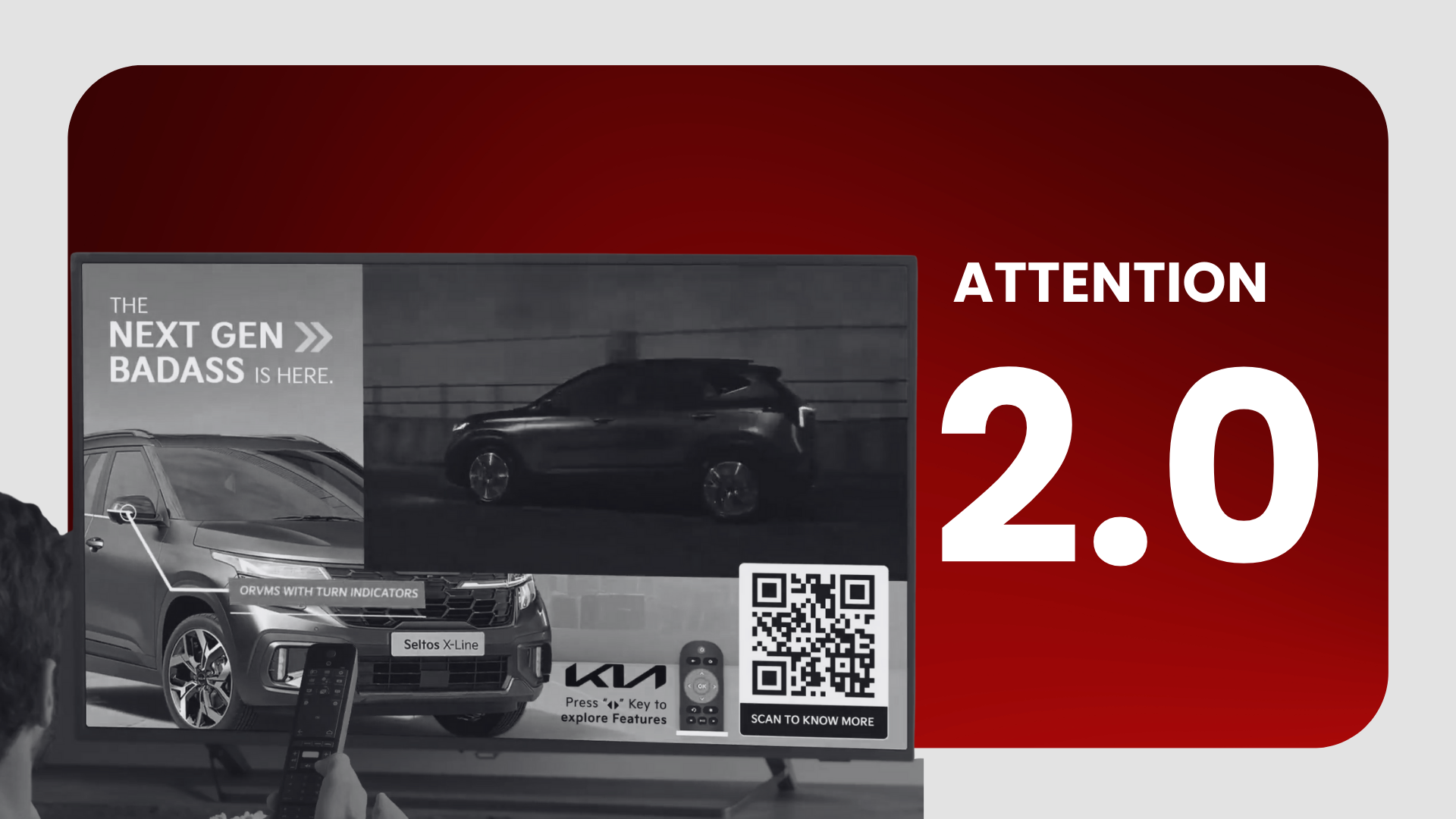
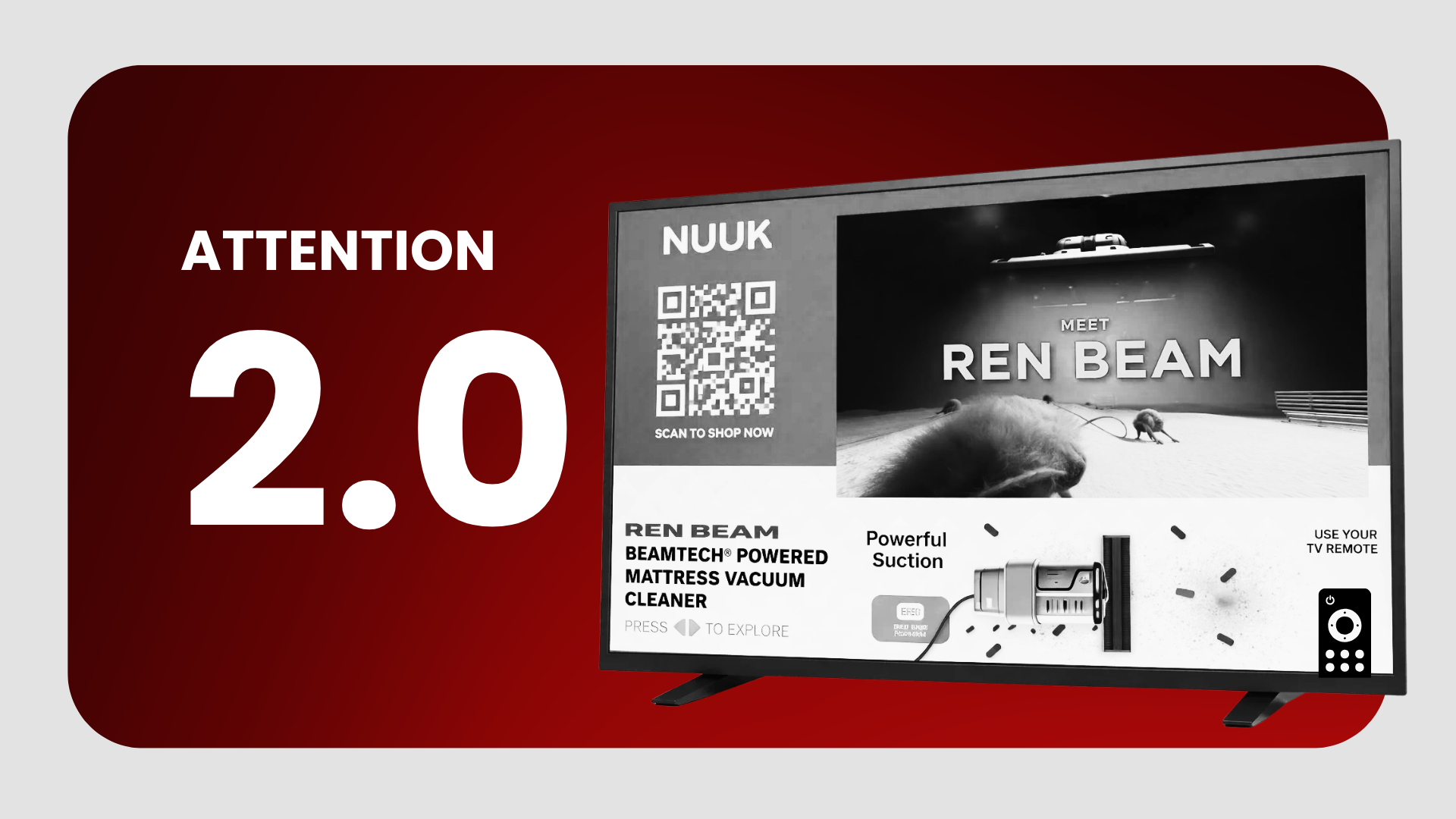
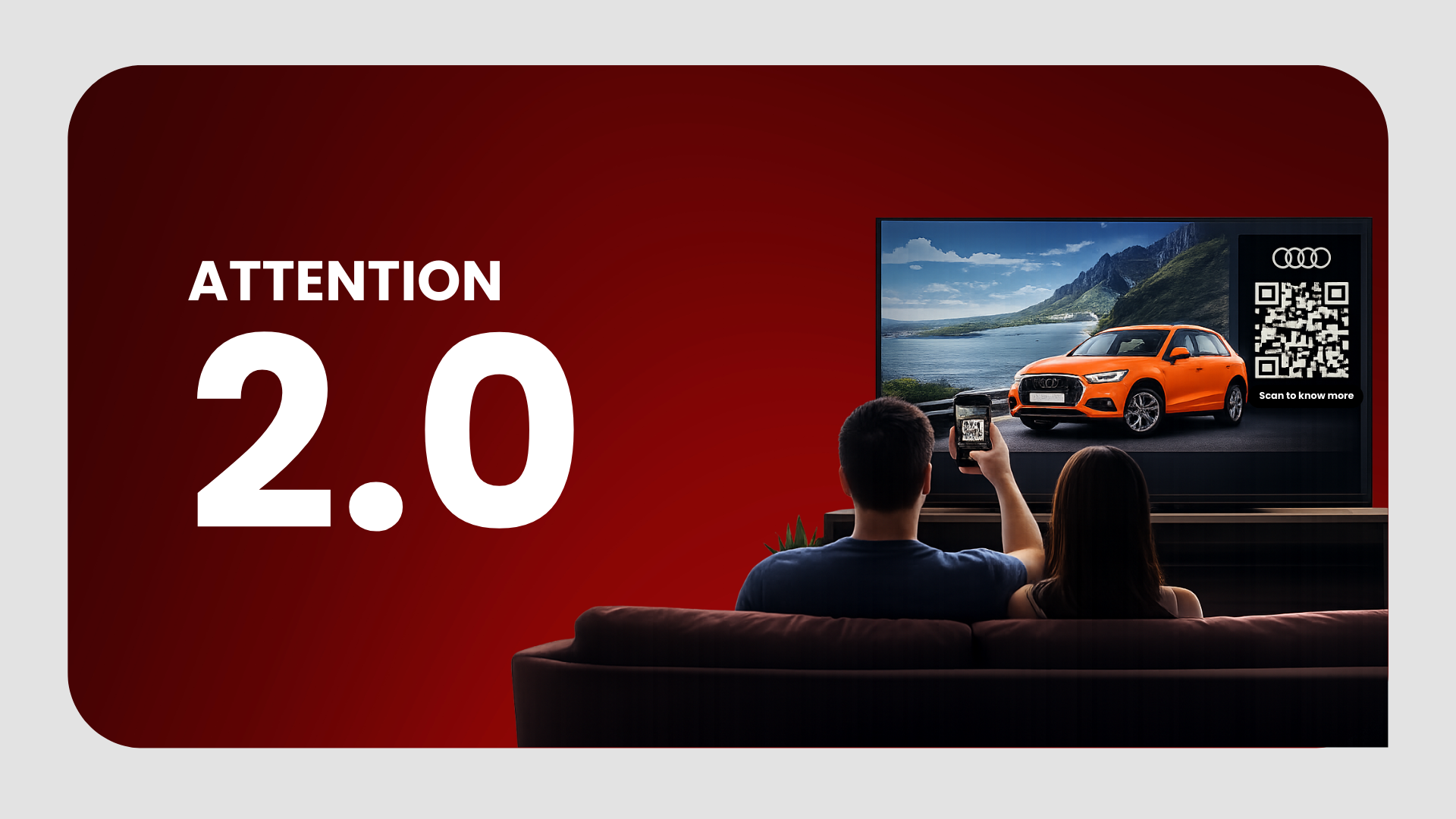
Interactive elements, response paths and contextual alignment have become practical tools, not experimental add-ons. That changes what “winning” can look like. A CTV ad no longer has to rely entirely on recall later. It can invite a next step in the moment, and it can do it without breaking the viewing experience when designed well.
Attention 2.0 is rooted in this evolution. CTV is not just a place where a message is delivered. It is increasingly a place where a message can be experienced, understood faster and acted upon when the viewer is receptive.
Fragmentation Is About Mindset Shifts
Fragmentation is easy to describe as “more platforms.” For advertisers, the more important reality is behavioral.
Viewers move through different viewing mindsets throughout the day. Sometimes they are immersed. Sometimes they are browsing. Sometimes they are watching while doing something else. Second-screen behavior makes those shifts unavoidable, because even when the ad plays, attention may be split.
This does not reduce the value of CTV. It simply means that attention is conditional. And when attention is conditional, scale must be paired with relevance to stay effective.
Where Scale Starts to Lose Power Without Relevance
Scale is still the foundation. The change is that scale alone has stopped being a reliable proxy for impact.
When scale is not shaped, two things quietly start to happen. First, overlap can distort what you think you achieved. A plan can look like it expanded reach while repeatedly touching the same households across environments. Second, context drift erodes persuasion. The message shows up in moments that do not match the viewer’s mindset, so it registers less deeply even though delivery remains strong.
This is not a critique of marketers or their plans. It is an environmental shift. The smartest advertisers are not abandoning scale. They are tightening the relationship between scale and relevance so the same impressions work harder.
Attention 2.0 Is How Brands Make Scale Behave Like Impact
Attention 2.0 is the planning layer that turns scale into a more dependable outcome.
It starts by treating relevance as something you engineer deliberately, which means using context as a real-time input rather than a post-campaign insight. From there, interactivity becomes the mechanism that turns attention into intent instead of a superficial add-on. Attention signals then close the loop, acting as confidence checks that help teams understand whether exposure actually had depth.
This direction is also reflected in industry frameworks. The IAB’s attention explainer points to signals like viewable time, share of screen, audibility, and completion as inputs for understanding attention beyond basic delivery. It distinguishes an “opportunity to see” from attention as whether the ad was actually seen or heard “and to what depth,” which is exactly the gap Attention 2.0 is designed to close.
VDO.AI, positions its advertiser suite around 700+ contextual segments across screens and streams to help brands activate in moments that matter, and its CTV offerings include customised CTV experiences designed to create shoppable, drive-to-site experiences. The point is not that brands need more placements. The point is that brands now have the tools to make placements more relevant and more actionable.
The Attention 2.0 Playbook for Brands on CTV
- Measure reach as incremental reach, not raw reach. Make deduplication a requirement so scale reflects net-new households, not inflated totals from overlap.
- Build relevance into the plan, not only into the brief. Use contextual alignment to match your message to the viewing moment and the viewer mindset.
- Use interactive layers to convert attention into intent. Treat QR and shoppable overlays as response paths that make awareness measurable when the viewer is ready.
- Validate exposure depth, not just delivery volume. Use attention inputs like audibility, share of screen, viewable time, and completion as confidence checks.
- Define success as business impact. Connect CTV investment to outcomes so the channel is evaluated on what it drives, not only where it appeared.
Attention 2.0 Is CTV Evolving Into a More Accountable Canvas
CTV is entering a different chapter. The medium still delivers scale, but scale is no longer an advantage by itself. The advantage is what you do with it.
Today, advertising gives brands more levers: contextuality that improves fit, interactive layers that create response, and measurement signals that reveal whether exposure had substance. Attention 2.0 is simply using those levers on purpose.