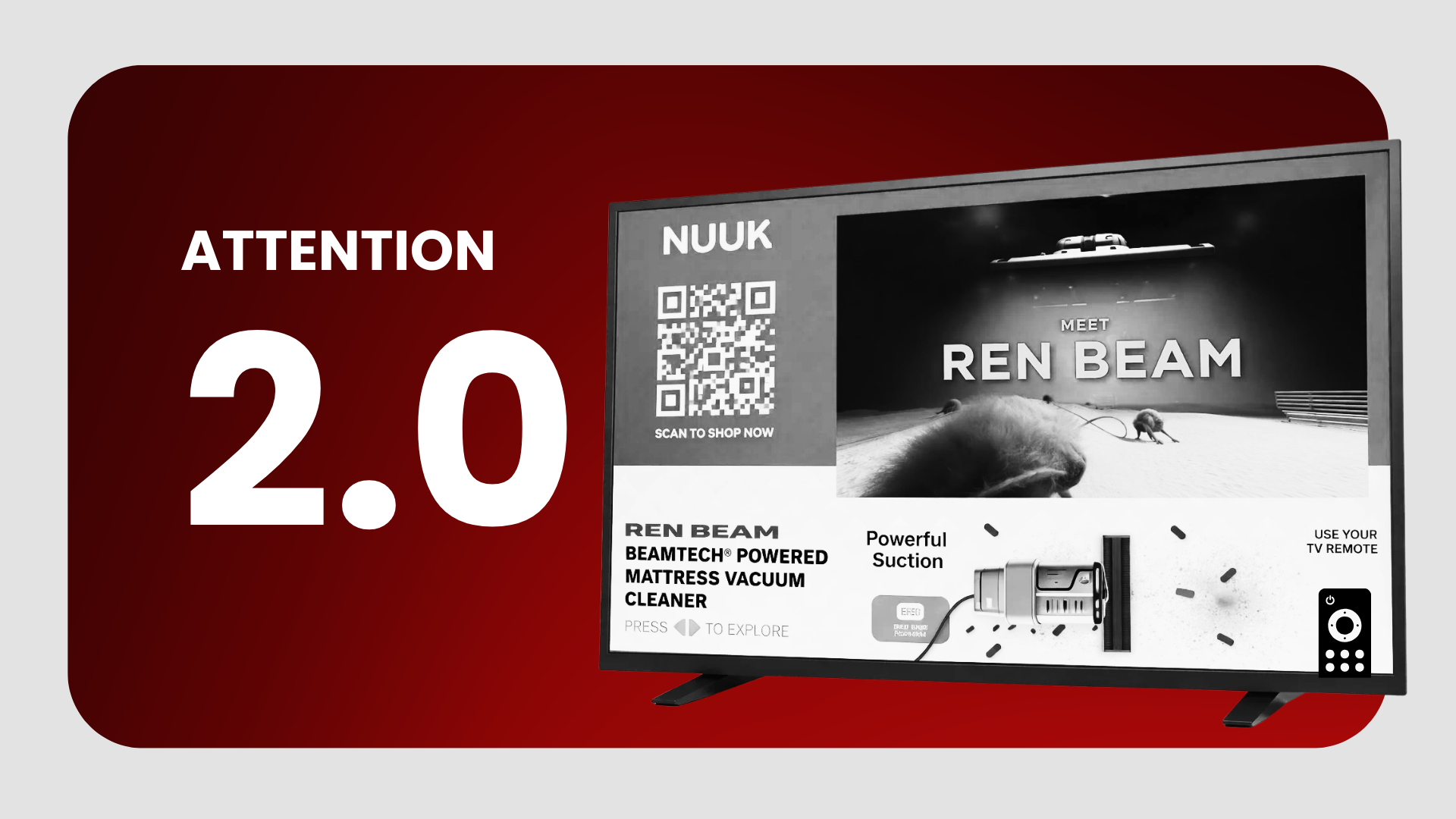









CTV is no longer a line item to optimise at the edge of a media plan. It has become the environment where brand equity and business outcomes coexist on the same screen. As scale accelerates, the role of television inside the organisation is changing from inventory allocation to performance architecture. Attention 2.0 reflects that shift. It signals that television now operates inside the same accountability framework as digital, without losing its premium impact.
For decades, TV strategy focused on distribution and reach, while performance lived in separate workflows with separate metrics. CTV collapses that divide. The same exposure that builds brand memory can now be connected to measurable actions through cross-device sequencing and outcome attribution. When brand and performance operate on the same surface, they must operate within the same system. That requires structural alignment, not incremental media adjustments.
Scale Now Depends on Governance
Budget appetite for CTV is strong, but scale is increasingly gated by trust. Leadership teams want confidence in programme-level transparency, frequency discipline across platforms and performance clarity that holds up in internal reviews. As spend grows, expectations grow with it. Television is no longer insulated from scrutiny simply because it is premium.
Attention 2.0 reframes CTV governance as a leadership responsibility. Cross-platform deduplication becomes a commercial standard. Incrementality becomes part of planning, not a post-flight exercise. Waste is quantified and reduced with ownership. These decisions sit above execution, yet they determine whether execution compounds value. Without governance, CTV becomes debated spend. With it, CTV becomes scalable infrastructure.
CTV Requires Organisational Alignment
Viewer behaviour has evolved into a multi-screen reality. Sessions are intentional, attention is conditional and relevance determines whether exposure earns focus or fades into the background. Big Screen no longer guarantees attention by default. It rewards design, sequencing and contextual precision.
Winning brands treat CTV as an orchestrated experience rather than a single placement. Creative, media, data, and performance teams align before activation, not after reporting. Sequencing is planned deliberately. Context is selected strategically. Handoffs to second-screen action are frictionless by design. This level of cohesion cannot be delivered by isolated teams. It requires organisational integration around one attention framework.
AI Is Becoming Strategic Infrastructure
In 2026, competitive advantage in CTV will not come from access alone. It will come from control. AI is increasingly embedded across cross-screen reach modelling, contextual decisioning, creative calibration and in-flight optimisation. But its value extends beyond efficiency. It reduces fragmentation between planning, activation and reporting.
When signals flow across the entire campaign lifecycle, CTV behaves like a connected operating system rather than a series of disconnected buys. Decisions accelerate without sacrificing oversight. Performance becomes more predictable because optimisation is continuous, not reactive. AI in this context is not a feature layer. It is the connective tissue that allows television to function as a modern growth engine.
The CMO Mandate in the Attention 2.0 Era
The shift underway is not tactical. It is strategic. CMOs must redefine how television is evaluated, aligning KPIs around both attention quality and business contribution. Cross-platform frequency standards, incrementality frameworks and transparency requirements must be formalised at the leadership level rather than negotiated campaign by campaign.
Attention 2.0 demands that television strategy to be institutionalised. When governance, creative sequencing, measurement discipline and AI-enabled optimisation operate as one system, CTV becomes a repeatable growth lever. The brands that win next will be the one redesigning their TV strategy around attention as an engineered asset rather than a passive outcome.